To create detailed 3D assets, it used to be required expensive software, as well as hours of manual labor. Designers had to create geometry, refine textures, and fine tune models meticulously before they could be suitable for production. Artificial Intelligence has altered the process drastically. Modern technology makes it possible to quickly create an 3D image from an image file making 3D design accessible to all levels of users, professionals and businesses alike.
3D AI Studio demonstrates how the technology has advanced, offering streamlined tools to assist creators in transforming their ideas into a finished model in less time.
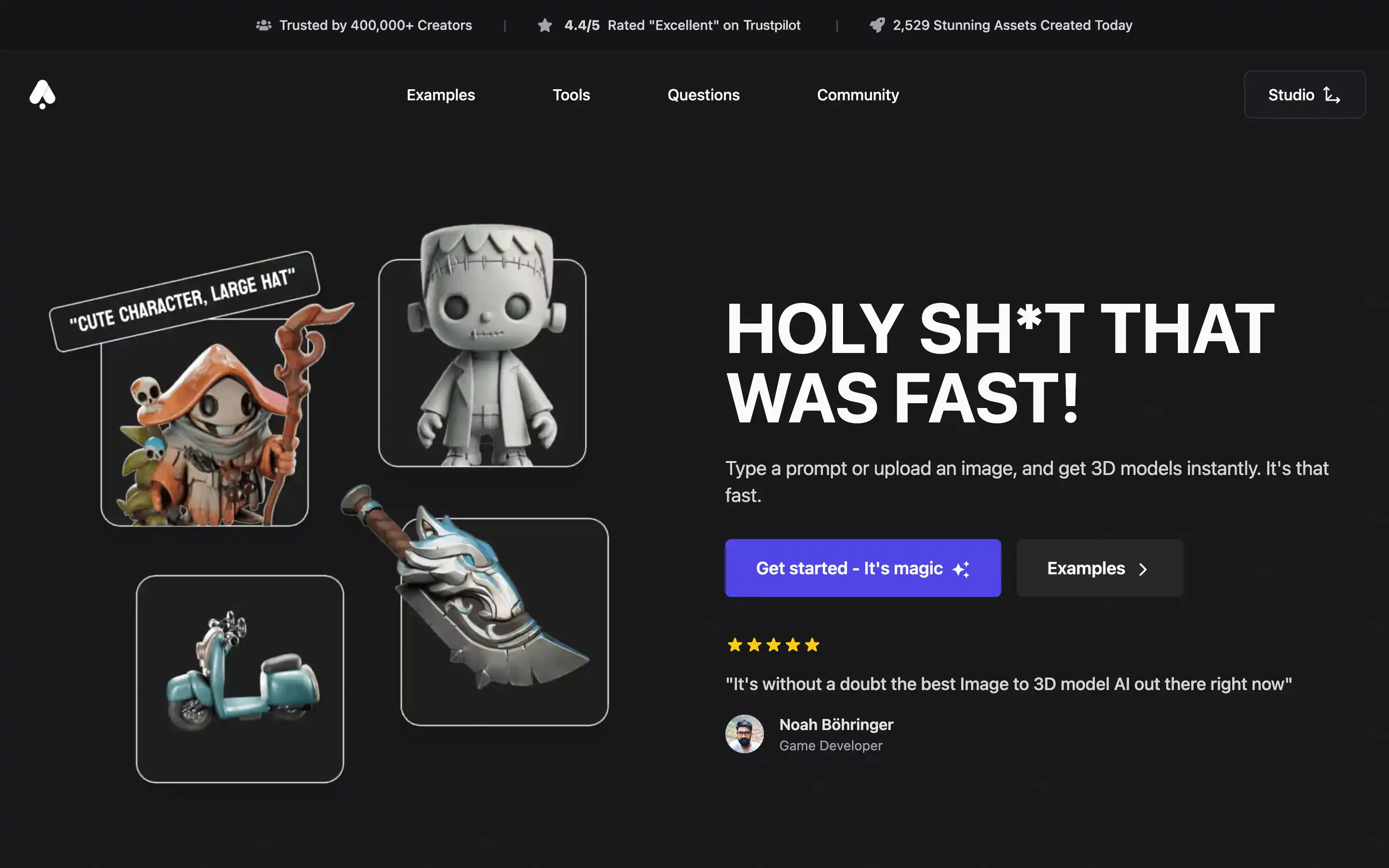
There is a growing demand for speedier 3D creation
The need for high-quality 3D content is growing across many sectors. Gaming products, design, architecture, film, and e-commerce all rely on real-life visual assets to communicate ideas clearly and entice the attention of viewers. Teams are trying to find ways to produce models more quickly but without compromising their quality as the demand for them grows.
AI-powered workflows and image to 3D models, free tools are a major factor in this. Instead of relying on complex modeling software to begin, creators upload an image and let AI look at the shapes, edges texture, shapes, and other aspects. The software reconstructs the visual information to produce an 3D structure.
This method allows for more experimentation and reduces the time required to build assets.
3D-Photography – How it Works
When the photo to 3D model process starts an artificial intelligence analyzes the image in detail. It recognizes patterns, predict depth and reconstruct the object in 3D. Advanced algorithms, trained on massive datasets, make sure that models created are realistic surface and proportions.
This technology is especially beneficial for rapid prototypes. Designers can snap a picture of a sketch or a physical item and convert it into a model to improve. Developers can create quickly placeholder assets, which allows them to experiment with layouts and environments before committing to intricate modeling.
Platforms like 3D AI Studio include tools that automate additional steps such as mesh optimization and texturing. This means that the finished product is appropriate for use in real life.
Practical Benefits for Creators and Businesses
Accessibility is among the greatest advantages of 3D modeling technology that converts images into models. AI-powered tools allow for more participation in 3D modeling. Traditional modeling is a process that requires years of expertise.
The effectiveness of the system is also a key benefit. Automated Retopology and texture generation remove several repetitive tasks, allowing designers focus on their creativity and designing decisions, not technical processes. Businesses benefit as well, since speedier production cycles will result in quicker delivery of projects and lower expenses.
Marketers are able to create visual content faster, educators can create interactive content while designers can showcase designs earlier in the process.
Organized Workflows and Flexible Export Options
Modern AI-based platforms allow you to manage models as well as create them. Asset libraries let users store and organize their projects in a an organized way that makes it easier for users to locate documents and manage several versions.
It is also crucial to be compatible. The 3D models are exported to a variety of formats that are commonly used, allowing seamless integration with game engines, rendering software, as well as 3D printing software. The generated files can be easily used in a variety of professional workflows.
Looking ahead The Future of AI-Driven 3D Design
The capabilities of 3D creation are growing as artificial intelligence improves. Future tools are expected to create more complex models, build entire environments and automate additional steps of the production pipeline.
As platforms such as 3D AI Studio continue to develop, creators will enjoy even greater control, speed, and flexibility when creating digital assets.
Conclusion
The capability to transform images into realistic digital objects has revolutionized the design process. Converting a photo or picture to the form of a 3D object has become simple quick, efficient, and speedy with the help of tools that facilitate workflows from image-to-3D model.
As technology advances, generating a 3D model from image files will become an essential part of modern design, helping creators bring ideas to life faster and with fewer limitations than ever before.