The industries of today are moving through a period of transition in which speed, efficiency and flexibility are not options anymore; they are required. Traditional infrastructure, which is often costly and slow to evolve and adapt to the rising demand for immediate insights and distributed processes. ScalerPi gives a fresh view on edge computing, combing it with engineering practices to provide solutions which are truely adaptable.
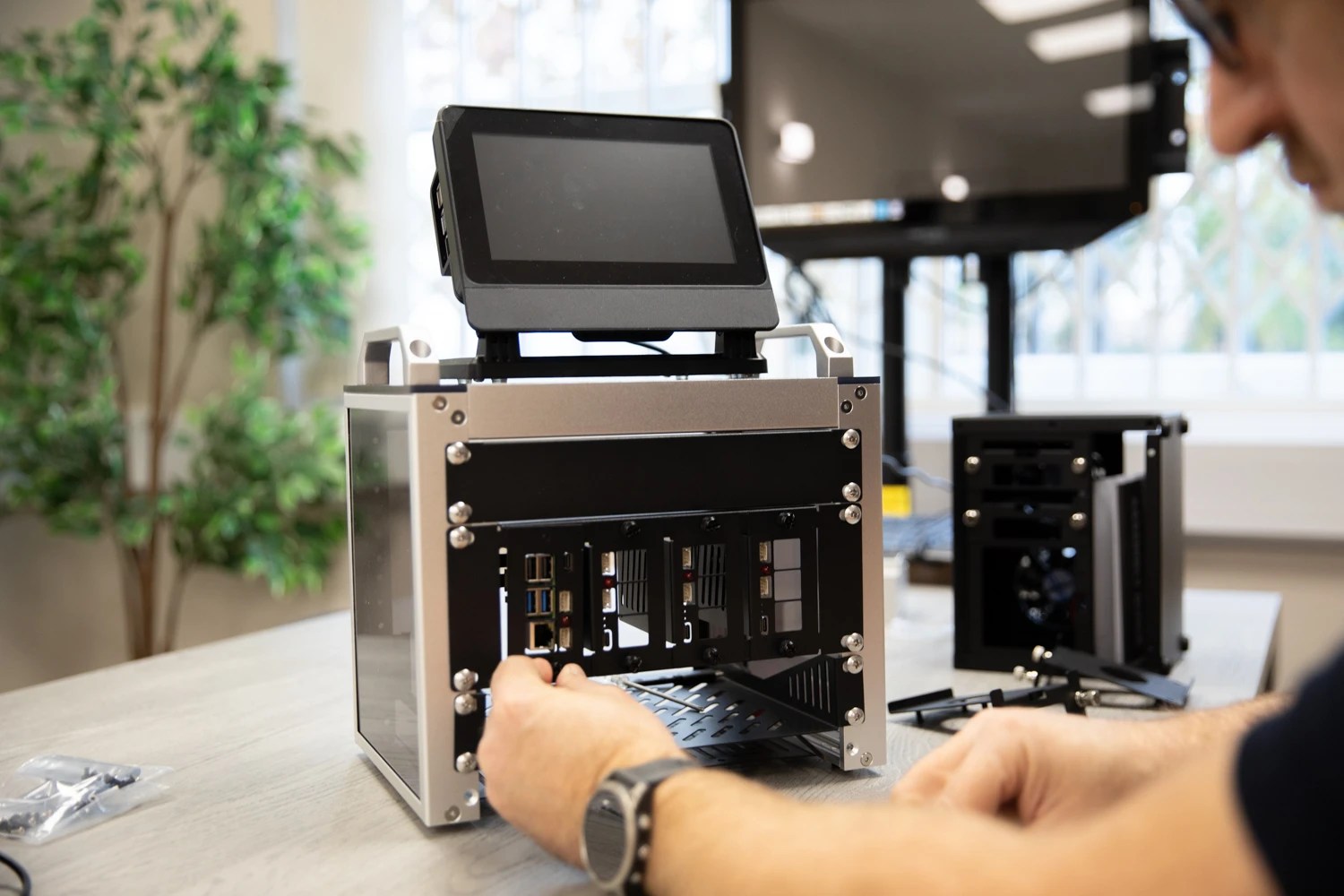
At the core of this evolution is industrial automation using Raspberry Pi, which enables organizations to rethink how they build and manage systems. Businesses can set up powerful and lightweight devices directly at the point of data, instead of relying solely on large, centralized hardware. This technique not only cuts down on latency but also empowers teams to be able to react instantly to changes in the environment.
Data for Action at the Edge
The capability to process data locally is the key advantage of edge computing. In many industrial environments it is not practical to wait for cloud-based systems to respond is just not practical. ScalerPi offers a system which is agnostic, but it is able to connect with other systems if needed.
The setup wouldn’t be complete without the robust Raspberry Pi IoT gate, that is the main link between the devices and applications. The gateway facilitates seamless communications between machines, sensors, as well as software platforms. Data is sent securely and efficiently. This allows users to monitor operations in real time, spot issues earlier, and maintain an even performance across several sites.
This ability can be transformative for businesses such as environmental monitoring and logistics. The systems are capable of functioning in areas that have low connectivity or even remote locations, ensuring operations and data remain available.
Compact Power for Demanding Environments
In the field of industrial computing, balancing speed and practicality is one of the toughest challenges. While powerful servers are great, they can be expensive as well as consume lots of energy and offer limited flexibility. ScalerPi provides industrial Raspberry Pi servers which deliver robust computing, with a compact and energy efficient design.
They are specifically designed for use in real-world situations where the power and space are both limited. No matter if they are installed in a factory as well as a retail outlet or remote monitoring station, these servers deliver consistent performance, without the requirement for a complicated infrastructure. They are modular, which lets businesses expand their systems gradually, aligning their growth with the needs of the moment.
Taking this a step further, the compact industrial Raspberry Pi compute module server gives you even more versatility. Built for demanding conditions These servers offer durability with the latest processing capabilities. These servers are ideal for applications that require continuous operation such as smart cities, or industrial automation systems.
Flexible Deployment Using Containerized Delivery
Containerization is a key element of the modern infrastructure. ScalerPi incorporates industrial Raspberry pi docker environments to provide flexibility and efficiency in managing applications. With Docker businesses can launch, update, and scale applications swiftly, without disrupting current activities.
This approach simplifies the development process and ensures the sameness between deployments. The applications can be tested in one location and seamlessly transferred to another environment, decreasing the chance of making mistakes and improving overall reliability. This degree of control that is vital for businesses with multiple sites is extremely beneficial.
Containerization can help in the development of new ideas. Teams are able to experiment and test new features without affecting existing systems.
Practical Solutions in multiple sectors
ScalerPi is a powerful instrument since it is adaptable to a variety of industries. Industrial automation with Raspberry Pi can reduce time to repair, increase efficiency and enable predictive maintenance in manufacturing. Machines can share and communicate information, creating a connected and intelligent production environment.
In agriculture, edge solutions help farmers adopt more efficient farming practices. Sensors track the weather patterns, soil conditions and the health of crops. This allows farmers to make educated choices that improve yields and help conserve resources.
The ability to monitor customer behavior in real-time is beneficial to the hospitality and retail industries. Businesses can streamline their operations while improving customer experience. From digital signage to queue management to digital signage, businesses can use it to improve customer service. Public sector initiatives like smart cities depend on cutting-edge technology to perform tasks such as asset tracking and environmental monitoring.
With Trust, Bridge Hardware and Cloud
What makes ScalerPi stand out is its ability to bridge the gap between physical devices and cloud-based systems. Combining hands-on experiences with the latest cloud technologies makes a platform that can support local processing, as well as centralized management.
This strategy allows businesses to expand without hassle. The infrastructure can be managed, cost-effective and secure no matter if you start with a small deployment or increase to thousands of devices. The transparent pricing system and modular designs help to simplify the process. Organizations can focus on innovation, rather than operating issues.
Industrial Technology for the Future
As the world’s industries continue to evolve increasing the demand for a more efficient and flexible infrastructure will rise. ScalerPi is a solution that can address these demands, combining the versatility of Raspberry pi technology and the power of edge-computing.
Every component, from industrial Raspberry Pi Servers, advanced IoT gateways, and containerized applications is made to be scalable and functional. The infrastructure does not only meet the needs of businesses today but also prepares for tomorrow’s challenges.